When a startup begins fundraising, one of the first questions founders face is which type of investor to approach.
Should you target venture capital firms? Angel investors? Family offices? Or another type of capital provider?
There is no single answer for every startup. Different investors have different structures, investment strategies, stages, check sizes, and expectations.
Understanding these differences can help founders create a more focused investor research strategy and avoid spending time on investors who do not match their company's current requirements.
What Is a Venture Capital Investor?
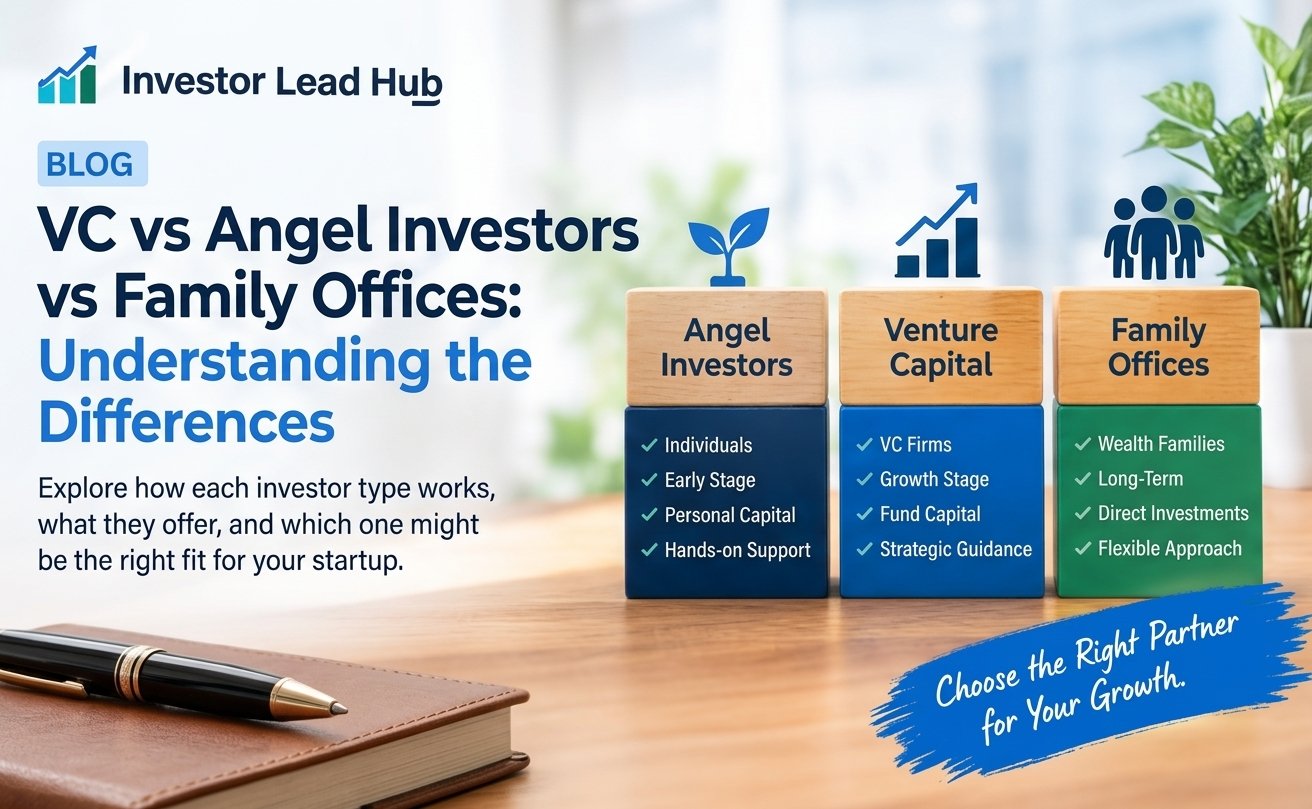
A venture capital firm manages investment capital and typically invests in companies with the potential for significant growth.
VC firms usually have a defined investment strategy covering areas such as:
-
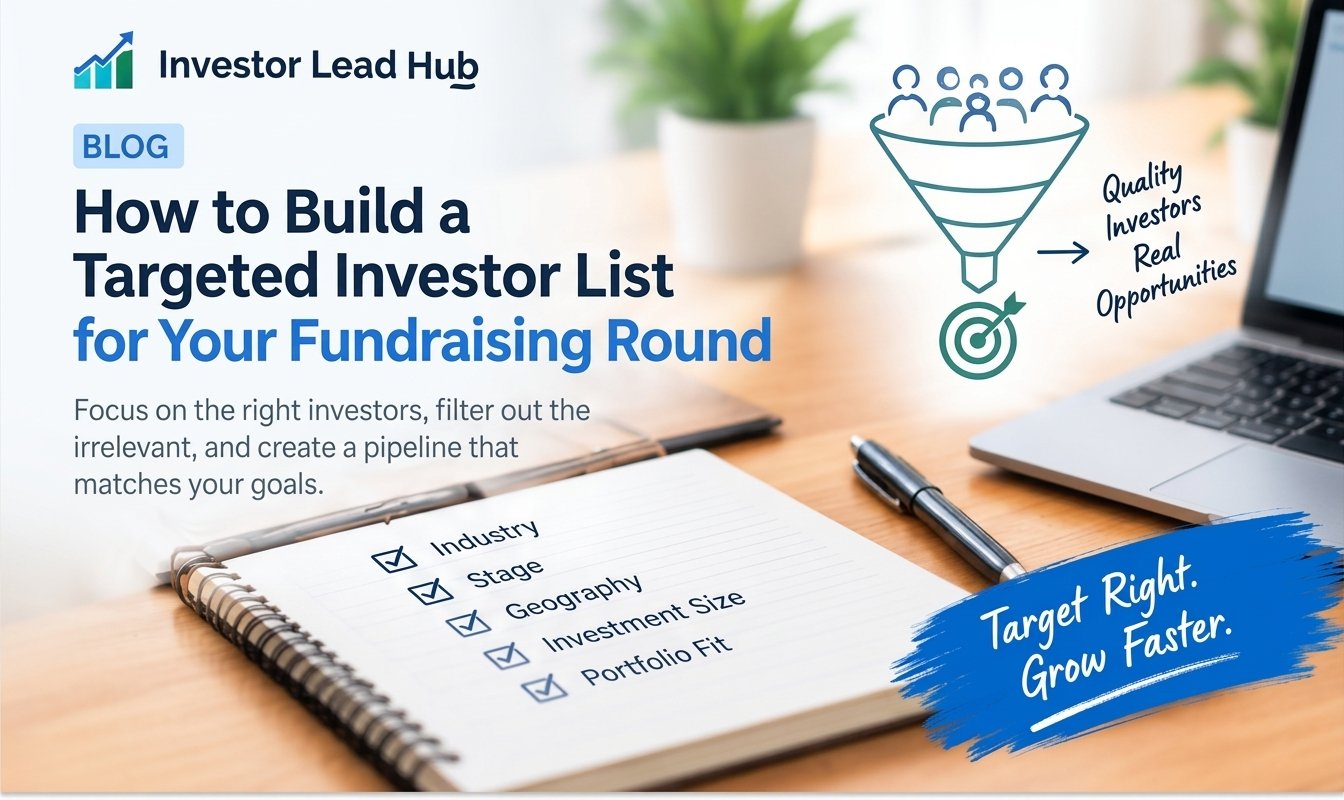
Industry
-
Funding stage
-
Geography
-
Investment size
-
Business model
-
Growth profile
A VC firm may have multiple investment professionals, and different partners may focus on different sectors.
When researching a VC, founders should look beyond the firm's name and investigate the specific fund, partner, stage, and investment thesis relevant to their business.
Investor Lead Hub's Venture Capital Firm Research service focuses on these factors, including industry, location, stage, investment focus, portfolio, and decision makers.
What Is an Angel Investor?
An angel investor is generally an individual who invests personal capital into businesses.
Angel investors can come from many professional backgrounds. Some are entrepreneurs, executives, founders, operators, or industry specialists.
This means an angel investor can potentially bring more than capital. Depending on the person, they may offer:
-
Industry knowledge
-
Business connections
-
Customer introductions
-
Hiring networks
-
Operational experience
-
Fundraising experience
However, every angel has a different investment strategy, so founders should research each investor individually.
Investor Lead Hub's Angel Investor Research service focuses on identifying relevant angels, operator-investors, and angel networks according to factors such as industry, stage, location, and investment focus.
What Is a Family Office?
A family office manages wealth and investments for an individual family or group of families.
Family offices can have different investment strategies. Some invest through funds, while others may make direct investments into businesses.
For founders, the important question is whether a family office has a relevant direct-investment mandate.
Research should examine:
-
Industries of interest
-
Direct investment activity
-
Geographic preferences
-
Investment size
-
Preferred company stages
-
Investment structure
-
Decision makers
Investor Lead Hub provides Family Office Research focused on identifying family offices that make relevant direct investments.
VC vs Angel Investors: Key Differences
The difference between venture capital and angel investors is not simply institutional versus individual.
The structure of the investor also affects the way the investment process works.
Investor Structure
VC firms typically invest capital managed by a fund.
Angel investors generally invest their own money.
Decision Making
A VC investment may involve several people within an investment firm and often follows a defined investment process.
An angel investor may make decisions individually, although some angels invest through syndicates or networks.
Investment Strategy
VC firms generally operate according to a defined fund strategy.
Angel investors may have more personal and flexible investment criteria, but this varies considerably between individuals.
Industry Expertise
Both VCs and angels can have deep industry expertise.
A VC may provide access to a broader institutional network, while an experienced angel or operator-investor may bring highly specific operational knowledge.
The relevant question is not which category is automatically better. It is which investor's experience and strategy match your company.
VC vs Family Office: What Is Different?
Family offices can differ significantly from VC firms.
A VC firm usually has a defined fund strategy and investment period. A family office may have a different approach to investment horizon, risk, diversification, and direct investments.
For founders, this means family office research should be highly specific.
Instead of searching for every family office, identify those with:
-
Relevant direct investments
-
Matching industries
-
Appropriate investment size
-
Suitable geography
-
Compatible investment structures
Angel Investors vs Family Offices
Angels and family offices can both invest directly in companies, but their structures are different.
An angel investor is usually an individual.
A family office is an organization managing family wealth and investments.
The research process should therefore be different as well.
For angels, investigate the person's background, investment history, portfolio, and industry expertise.
For family offices, investigate the organization's direct investment mandate, portfolio, principals, investment preferences, and relevant decision makers.
Which Investor Type Should You Research?
The answer depends on your company's fundraising profile.
Consider the following factors.
Your Funding Stage
Pre-Seed and Seed companies may research angel investors and early-stage VC firms.
Later-stage companies may need to expand research toward institutional investors, growth investors, private equity, or strategic investors depending on the business.
Your Industry
Some investors specialize heavily in specific sectors.
For example:
-
SaaS
-
AI
-
Fintech
-
Healthcare
-
Climate technology
-
Cybersecurity
-
Consumer products
Industry-specific investor research can help you identify investors with relevant experience.
Your Geography
Some investors focus on particular countries or regions.
If your startup is entering a new market, investors with local knowledge and networks may be relevant.
Your Funding Amount
Your target raise should be compatible with the investor's typical investment size.
There is little value in spending significant time pitching investors whose normal investment range is not compatible with your funding requirements.
Build an Investor Mix Instead of a Single List
Founders do not necessarily need to choose only one investor category.
A fundraising pipeline can include multiple investor types.
For example, a startup could research:
-
Relevant angel investors
-
Early-stage VC firms
-
Family offices
-
Corporate investors
-
Strategic investors
Each category can serve a different purpose.
A diversified research pipeline can give founders more options while still maintaining clear qualification criteria.
How to Compare Investors
Create a consistent research framework.
For each investor, track:
| Criteria | What to Research |
|---|---|
| Investor Type | VC, angel, family office, etc. |
| Industry | Relevant sectors |
| Stage | Pre-Seed, Seed, Series A, etc. |
| Geography | Countries or regions |
| Investment Size | Typical check |
| Portfolio | Similar companies |
| Recent Activity | Recent investments |
| Decision Maker | Relevant partner or investor |
| Contact | Verified business information |
This makes it easier to organize your fundraising pipeline.
Why Portfolio Research Matters
Portfolio companies provide valuable clues about an investor's actual behavior.
An investor may say that they are interested in a particular industry, but recent portfolio activity can provide additional context.
Reviewing the portfolio can help answer:
-
Have they invested in similar businesses?
-
Have they invested at your stage?
-
Do they understand your market?
-
Do they already back competitors?
-
Are they active in your target geography?
Portfolio research should therefore be part of your investor qualification process.
Frequently Asked Questions
What is the difference between a VC and an angel investor?
Are angel investors only for early-stage startups?
What is a family office investor?
What is the difference between a family office and a VC firm?
How do I find angel investors in my industry?
Conclusion
VC firms, angel investors, and family offices all operate differently. The most useful starting point is to understand what your company needs and then research investors against those requirements.
Instead of asking which investor type is universally best, ask:
Which investors have demonstrated activity that matches my industry, stage, geography, funding amount, and business model?
That question creates a much more practical foundation for fundraising.
If you need a customized investor list, you can explore Investor Lead Hub's services or start your investor research.